Project Overview
Project Dreamtime was an 8-week university project consisting of four 2-week Agile sprints in partnership with the Australian Red Cross that aimed to raise awareness of First Nations Peoples diversified arts, culture, and values.
Our team developed an end-to-end mobile application that allows Indigenous Artists to showcase their artwork and connect with the Australian community to bring awareness to the heritage and cultural significance of Indigenous artworks.
UI/UX Designer
Mobile App
June-21 - Aug-21
Team & Role
I was the UI/UX Designer, and I was part of a diverse Agile team consisting of a Scrum Master, Product Owner, 2 Business Analysts and 2 Developers.
I was responsible for:
- Defining user pain points
- Converting user requirements into a product through the development of wireframes and prototypes in Figma and Android Studio
- Interacting with end users to conduct usability tests and refine the product.
The Solution
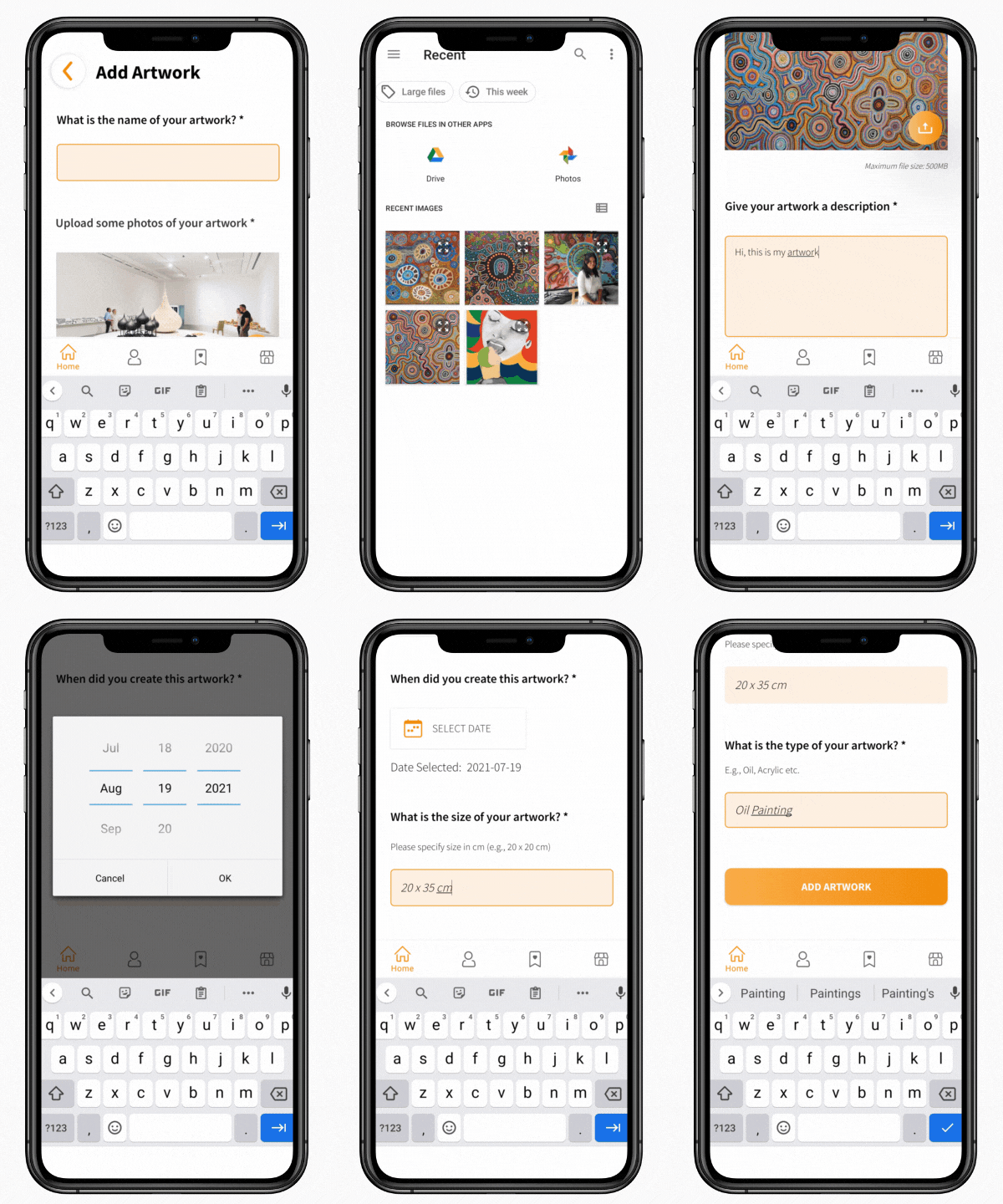
Upload your creations and share them with the community
Indigenous artists can create their own unique profile and upload their artworks for others to view, along with their commentary on the cultural significance and meaning of the artwork.
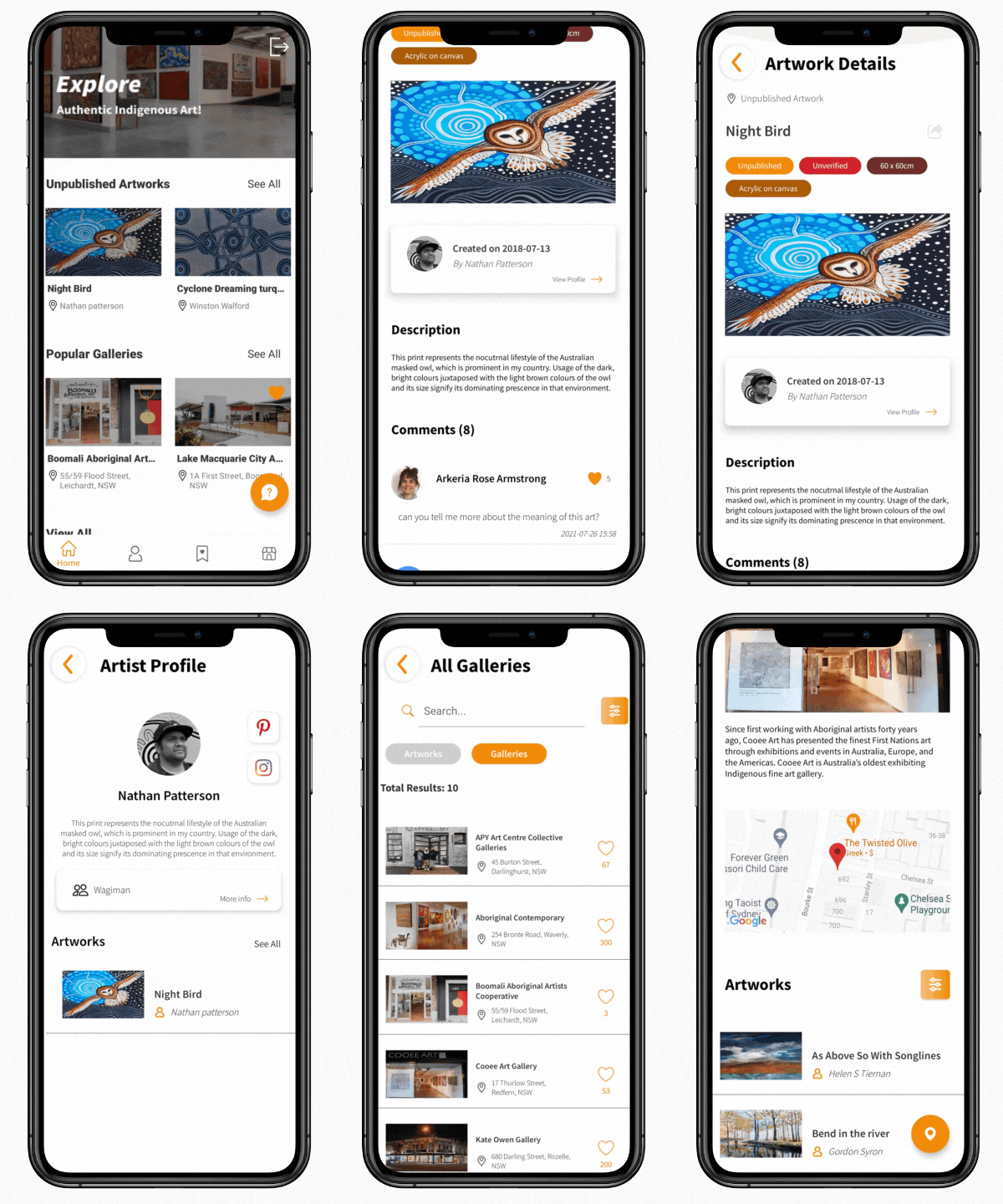
Explore arts & culture from anywhere, anytime
Browse an extensive list of Indigenous galleries and Indigenous artworks and support First Nations creators by liking, sharing and commenting on their artworks.
The Design Process
Research: User Surveys
To understand the expectations, concerns, and motivations of our target market, I collaborated closely with the Business Analysts in our team to design user surveys for each of our target users (Indigenous Artists and Art Enthusiasts).
After surveying 42 Art Enthusiasts and 30 Indigenous Artists, I found the following results...
Indigenous Artists don’t have an equal opportunity to showcase their artworks.
12 out of 30 Artistslisted a lack of platforms to showcase their artwork as their biggest concern when distributing their artworks.
Art Enthusiasts don’t have accessible platforms to view Indigenous Artworks.
18 out of 42 respondents struggled to access places where they could view Indigenous artworks.
The meaning of Indigenous artworks are lost in translation.
16 out of 42 respondents struggled to understand the meaning behind Indigenous artworks.
Research: User Personas
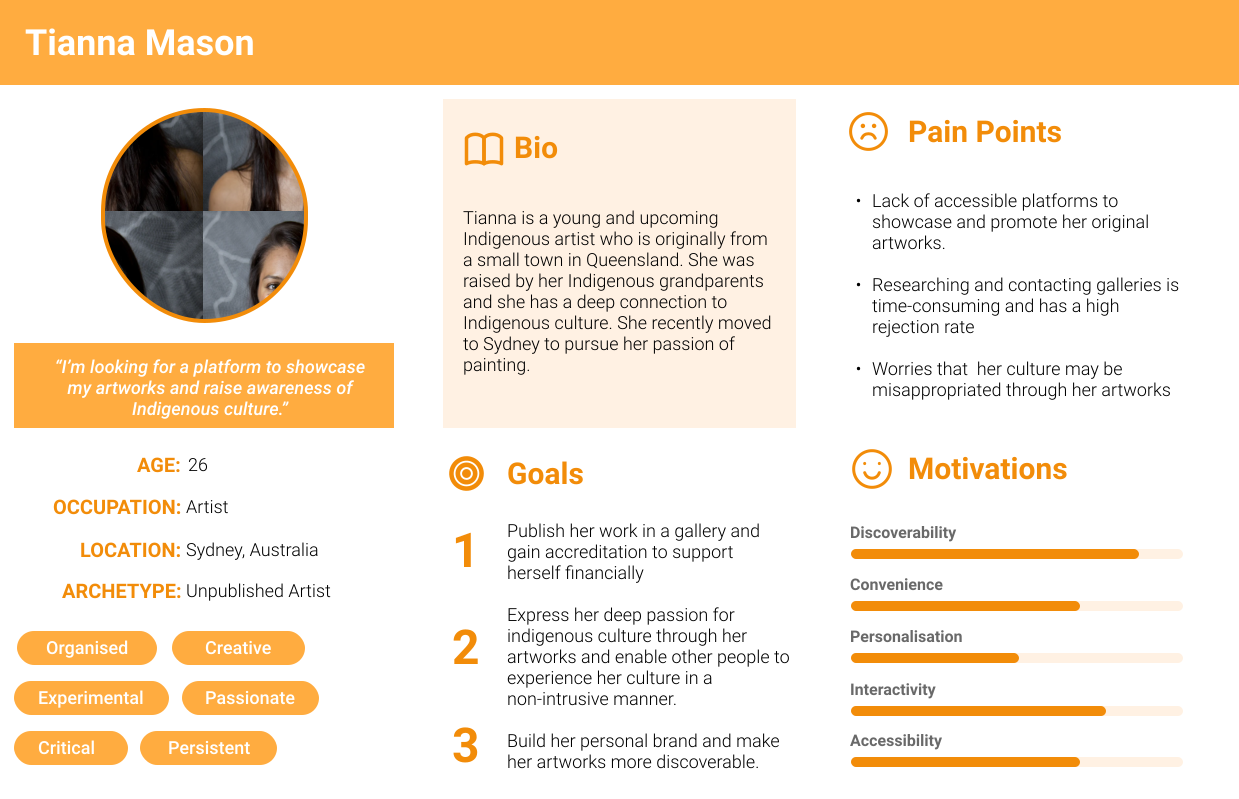
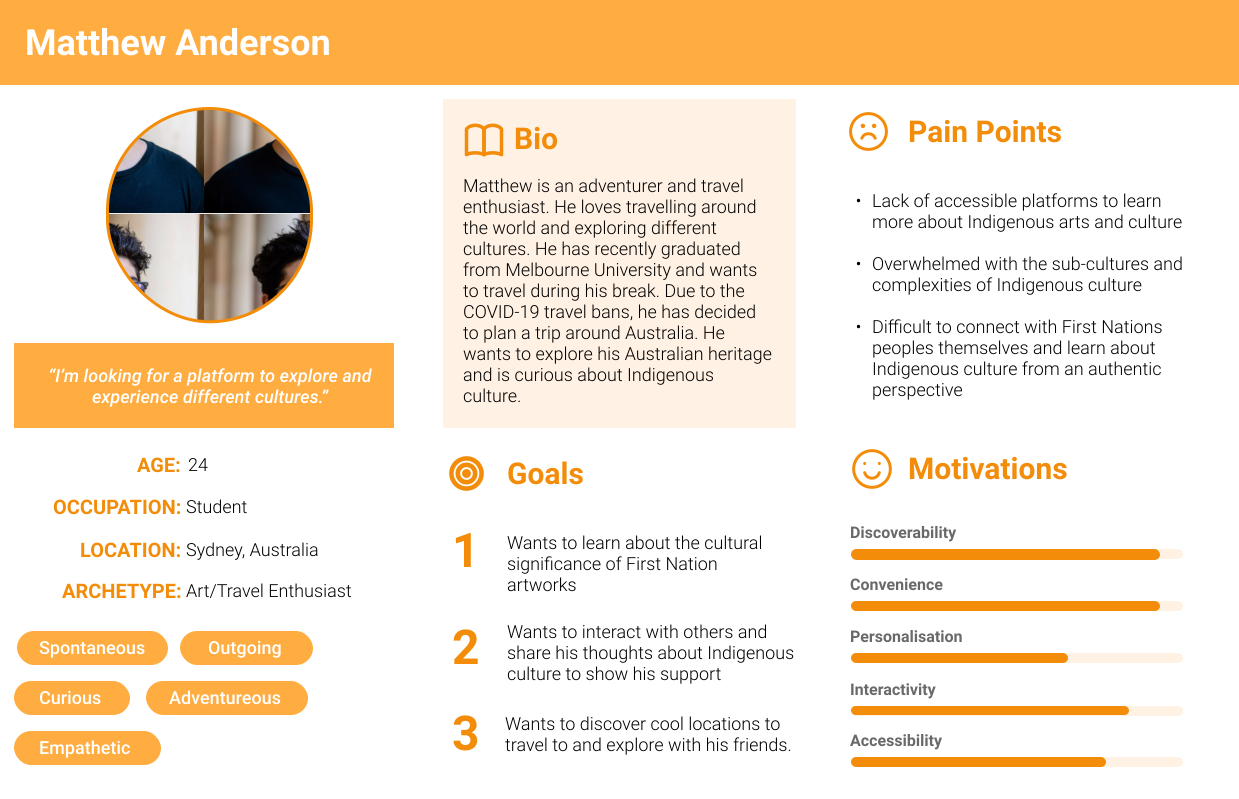
After analysing the data from user surveys, I created two user personas to further specify the core needs and motivations of Dreamtime’s target market. I chose to create user personas as they were a great tool for us to empathise with our users, especially when it was difficult to meet them face-to-face given COVID-19 restrictions.
The user personas were critical to the success of the project, as they enabled us to effectively prioritise feature requests based on how well they addressed the goals of the primary persona, preventing scope creep.
Research: Opportunities
After isolating the pain points of these users, I outlined their core needs.
Discoverability
Art Enthusiasts want a broader selection of Indigenous Artworks (both contemporary and non-contemporary) and Artists want their artworks to be discovered and understood by the non-Indigenous community.
Convenience
Art Enthusiasts want an easy way to browse artworks instead of visiting galleries or searching through the internet and browsing virtual art galleries manually. Artist want a quick and easy way to promote their brand and artworks.
Interactivity
Art Enthusiasts want to connect with Artists to hear an authentic point of view on the artwork’s creation. Artists want a platform to share their unique stories and engage with the community to educate them about Indigenous culture.
Research: User Flows
I created two user flow diagrams based on the personas that I created earlier. This helped the team to hash out user flows before building the product and visualise the user journey so we could optimise the user experience. It also helped to identify the screens we needed to create, acting as a blueprint for the development team to understand the big picture.
User Flow: Tianna (Indigenous Artist)
User Flow: Matthew (Art Enthusiast)
Prototyping: Whiteboard Sketch
During our initial brainstorming session, we determined that the aim of our application was to allow Indigenous artists to create a digital portfolio of their artworks and provide art enthusiasts with a platform to explore artworks.
I drew from familiar discovery applications such as Spotify to sketch an initial concept on a whiteboard. The sketch showcases the applications’ key pages including the login, onboarding, home and detail pages.
Prototyping: Low-Fidelity
After the initial sketches I developed, I designed greyscale wireframes using Figma to communicate our ideas quickly and easily to stakeholders without a high level of commitment and the extensive use of resources.
Testing: Usability Workshops
Throughout the development process, I led the organisation and execution of usability testing workshops with University Students and Indigenous Artists to collect rich user feedback.
These usability workshops were task-based, prompting users to conduct actions, and documenting their comments and observations. The team opted for quality over quantity, conducting tests with 2-3 users during each release, allowing us to move quickly and keep our sprint momentum.
Testing: User Insights
I conduced usability testing with 12 univeristy students. First impressions from users were positive, with many liking the intuitive and familiar layout of the application.
Summary of Findings
- The top navigation bar was hardly used - 10 out of 12 users indicated preference for a bottom navigation bar over an expandable top navigation menu.
- There was no quick way to see all of the galleries/artworks in each section - 10 out of 12 users wanted a ‘View All’ option.
- The navigation icon was mistaken for a button and 8 out of 12 users expected to be directed to a map view.
- 9 out of 12 users didn’t know the artist profile was clickable.
- 6 out of 12 users indicated that more information on artworks would be great such as the type of artwork (e.g., Oil, Acrylic etc.) and size.
Feedback from testers was carefully considered when developing further design iterations of the application.
Testing: Prioritising Features & Improvements
After conducting tests with end users, new feature requests were popping up, which meant we needed to prioritise features and evaluate the scope of our application to avoid feature and scope creep.
I led a feature prioritisation session based on the RICE Prioritisation Model, which considered the reach, impact, confidence and effort required to develop each feature. The higher the RICE score, the more desirable the feature was to implement.
Prototyping: Style Guide
For Dreamtime’s design, I wanted to incorporate a lively yet minimal colour palette. I decided to use shades of orange as the primary colour, as warm tones of orange are commonly used in Indigenous artworks to represent the earth. Grey was used as a secondary colour to complement the vibrant tones of orange and create a sense of minimalism. Additional vectors are used to keep the design modern and invoke a sense of abstractness and creativity.
Prototyping: High-Fidelity
Below are the final high-fidelity wireframes that were created in Figma, visually outlining each step of the user’s journey.